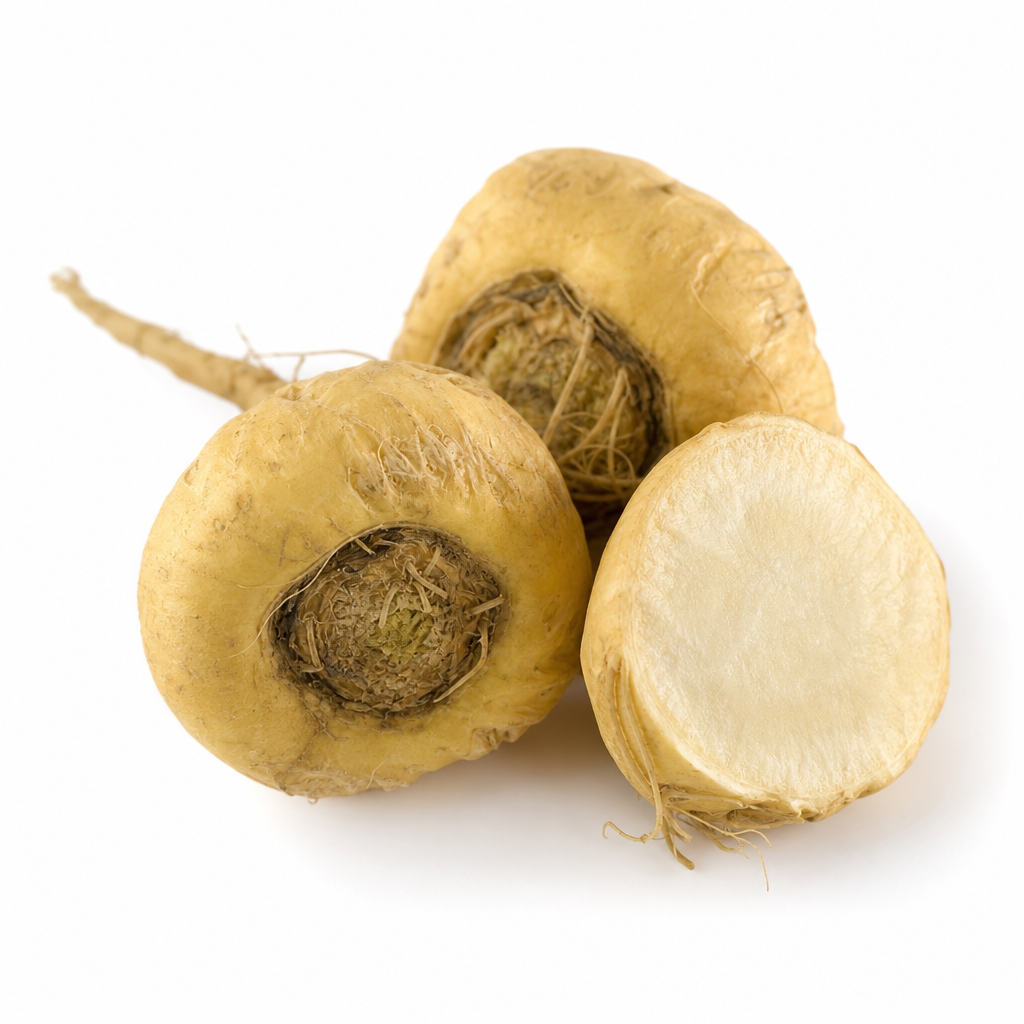
What exactly is maca root and why do people take it as a supplement?
Maca root (Lepidium meyenii) is a cruciferous plant native to the high-altitude Andean plateaus of Peru and Bolivia, where it has been cultivated for over 2,000 years as both a food staple and traditional medicine. The fleshy, turnip-like hypocotyl is the part used in supplements, and it is classified as an adaptogen — a category of botanicals studied for their potential to help the body manage physical and psychological stress. People most commonly take maca root to support libido, energy, endurance, mood, and hormonal balance, particularly around menopause. It is available in several forms including capsules, powders, gelatinized powder, and liquid extracts, and is sometimes combined with other botanicals like [Panax Ginseng Root](/ingredients/panax-ginseng-root) or [Horny Goat Weed (Epimedium)](/ingredients/horny-goat-weed-epimedium) in men's vitality formulas.
How strong is the actual clinical evidence behind maca root — is it well-studied or mostly hype?
Maca root has a reasonably solid evidence base for a botanical supplement, particularly for libido and sexual function, where the research earns a relatively high evidence score of 8.1/10 based on multiple randomized controlled trials in both men and women. Its support for menopausal symptom relief scores 7.4/10 and male fertility parameters 7/10, with several small-to-moderate human trials showing improvements in sperm count, motility, and self-reported sexual desire. Evidence for energy, endurance, and mood support is more preliminary, with scores in the 6.5–6.8/10 range, meaning results are promising but studies are smaller and less consistent. Bone health support is the least established benefit at 5.8/10, largely based on animal and postmenopausal population data rather than large human trials.
Who is most likely to actually notice a benefit from taking maca root?
People who tend to report the most noticeable effects from maca root are those experiencing low libido, sexual dysfunction, or menopausal symptoms — groups that have been the primary focus of clinical research on this ingredient. Perimenopausal and postmenopausal women have shown improvements in sexual dysfunction and psychological well-being in several trials, while men have seen modest improvements in sperm parameters and self-reported sexual desire. Athletes and active individuals sometimes use maca for endurance support, though the evidence here is less robust. Those already taking adaptogens like [Panax Ginseng Root](/ingredients/panax-ginseng-root) or [Mucuna Pruriens](/ingredients/mucuna-pruriens) may find maca a complementary addition rather than a standalone solution.
How much maca root should I actually be taking, and does it matter when I take it?
The most commonly studied and recommended dose range for maca root is 1,500–3,000 mg per day of dried root or gelatinized powder, typically divided across one or two servings. Most clinical trials showing benefits for libido and menopausal symptoms used doses within this range over periods of 6–12 weeks, suggesting consistent daily use matters more than any single large dose. Maca is best taken in the morning or early afternoon with food, as its mild energizing properties may interfere with sleep if taken late in the day. Gelatinized maca powder is often preferred over raw powder because the gelatinization process removes starch, making it easier to digest and potentially improving bioavailability.
How does maca root compare to horny goat weed for libido support, and is one better than the other?
Maca root and [Horny Goat Weed (Epimedium)](/ingredients/horny-goat-weed-epimedium) are both commonly used to support libido and sexual function, but they work through different proposed mechanisms — maca is thought to act through neurotransmitter pathways and nutritional support rather than hormonal modulation, while horny goat weed contains icariin, a compound studied for its phosphodiesterase-5 inhibitory activity, which is more directly related to circulation and erectile function. Maca has stronger human clinical trial evidence specifically for self-reported sexual desire and menopausal symptom relief, while horny goat weed's human evidence is more limited despite its well-characterized mechanism in preclinical research. Rather than choosing one over the other, many formulas combine both alongside ingredients like [Panax Ginseng Root](/ingredients/panax-ginseng-root) for broader support — as seen in products like [OPA Horny Goat Weed Capsules](/products/opa-horny-goat-weed-libido-circulation). As for getting maca from food, the root is traditionally eaten boiled or dried in Peru, but achieving the 1,500–3,000 mg doses used in studies from whole food alone is impractical outside of its native region, making supplementation the more realistic option for most people.
Are there any safety concerns, drug interactions, or people who should avoid maca root?
Maca root is generally considered safe and well-tolerated at typical supplemental doses, with no serious adverse effects reported in clinical trials of up to 12 weeks. However, because maca is a cruciferous vegetable and contains glucosinolates, individuals with thyroid conditions — particularly hypothyroidism — are sometimes advised to use caution, as high intake of glucosinolates may theoretically affect thyroid function, though this has not been clearly demonstrated at normal supplement doses. People who are pregnant or breastfeeding should consult a healthcare provider before use, as safety data in these populations is limited. Maca does not appear to act directly on sex hormone levels in the way that hormone-modulating drugs do, but anyone on hormone-sensitive medications or treatments should discuss supplementation with their doctor before starting.