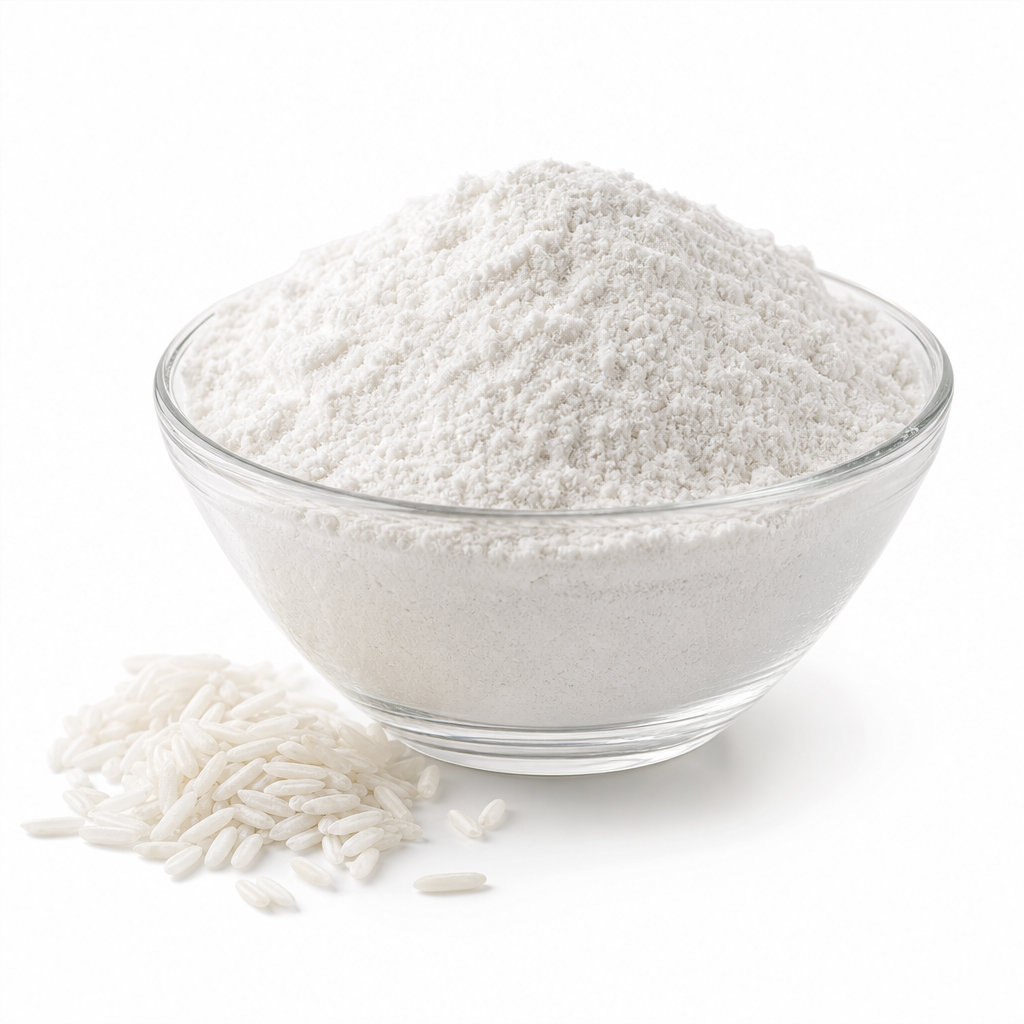
What exactly is rice flour and why do I keep seeing it listed as an ingredient in my supplements?
Rice flour is a finely milled powder made from ground white or brown rice (Oryza sativa) and is one of the most widely used filler and excipient ingredients in the dietary supplement industry. It serves as a bulking agent that helps manufacturers achieve consistent capsule fill weights, improve powder flow during production, and maintain tablet integrity — essentially acting as a neutral carrier for active ingredients. Because it has a mild flavor, low allergen potential, and is naturally gluten-free, it is commonly chosen over alternatives like wheat starch or lactose-based fillers. You may also see it listed as rice powder, rice starch flour, or simply Oryza sativa flour on supplement labels.
Is there actual clinical evidence that rice flour does anything beneficial, or is it just a filler with no real effect?
Rice flour's strongest evidence base (evidence score 8.9/10) is in supporting gluten-free formulation — it is well-established as a safe, non-reactive substitute for gluten-containing starches in both food and supplement manufacturing. Its hypoallergenic profile is also well-supported (evidence score 8.5/10), with research consistently showing it is tolerated by individuals with common food sensitivities including gluten intolerance and dairy allergies. As a digestive ingredient, rice flour has been studied for its tolerability in sensitive populations (evidence score 7.8/10), and brown rice flour specifically has been examined for modest micronutrient retention, though evidence for that benefit is more limited (evidence score 5.9/10). When used as a carbohydrate energy source, the evidence for sustained energy delivery is moderate (evidence score 6.4/10) compared to more studied carbohydrate ingredients like [psyllium husk](/ingredients/psyllium-husk) or [fructooligosaccharides](/ingredients/fructooligosaccharides).
Who actually benefits from taking supplements that contain rice flour — is it only for people with gluten intolerance?
While individuals with celiac disease, non-celiac gluten sensitivity, or wheat allergies benefit most directly from rice flour's gluten-free and hypoallergenic properties, it is broadly well-tolerated across most populations and is not exclusively for those with dietary restrictions. People with sensitive digestive systems or multiple food allergies may find rice flour-based supplements easier to tolerate compared to products using fillers like lactose or wheat-derived starches. It is also a practical choice for those following vegan, paleo, or allergen-conscious supplement regimens, since it is plant-derived and free from the most common allergens. Products like [OPA Colon Sweep](/products/opa-colon-sweep-daily-detox-support) use rice flour alongside digestive support ingredients such as [aloe vera](/ingredients/aloe-vera), making them accessible to a wide range of users including those with ingredient sensitivities.
How much rice flour is typically in a supplement capsule, and does the amount actually matter?
When used as a filler or excipient in dietary supplements, rice flour is typically present in amounts ranging from 50 to 500 mg per capsule or serving, with the exact quantity determined by the space needed to fill the capsule after the active ingredients are included rather than by any therapeutic target dose. At these amounts, timing is largely irrelevant — rice flour as a filler does not require food or specific timing to function as intended. If rice flour is being used as a carbohydrate energy source in a food or sports nutrition context, it would be consumed in much larger gram-level quantities as part of a meal or recipe. As a supplement excipient, the dose is functional rather than pharmacological, so the amount listed on a label is informational rather than a guide to efficacy.
Are there any safety concerns, drug interactions, or side effects I should know about before taking a supplement that contains rice flour?
Rice flour is generally recognized as safe (GRAS) by the FDA and has a well-established tolerability profile across diverse populations, with no significant drug interactions documented at the amounts typically found in dietary supplements. Individuals with a rare rice allergy should avoid it, though rice allergies are considerably less common than allergies to wheat, soy, or dairy. One practical consideration with white rice flour specifically is its relatively high glycemic index compared to whole grain alternatives, which may be relevant for individuals closely managing blood sugar — brown rice flour has a somewhat lower glycemic impact due to its fiber content. At excipient-level doses (50–500 mg), glycemic impact is negligible, but this distinction becomes more meaningful when rice flour is consumed in larger food-grade quantities.
How does rice flour compare to aloe vera as a supplement ingredient, and is it better to just eat rice than take a supplement with rice flour in it?
Rice flour and [aloe vera](/ingredients/aloe-vera) serve fundamentally different roles in supplements — rice flour is primarily a structural excipient and hypoallergenic filler, while aloe vera is an active botanical ingredient studied for its own digestive and mucosal support properties, making direct comparison of their benefits largely irrelevant since they are not interchangeable. In products like [OPA Colon Sweep](/products/opa-colon-sweep-daily-detox-support), rice flour functions as a carrier while aloe vera contributes the active digestive support. As for eating rice versus taking a supplement containing rice flour: consuming whole rice or brown rice as food provides meaningful carbohydrates, fiber, and micronutrients, whereas the rice flour in a supplement capsule is present in amounts too small (50–500 mg) to contribute nutritionally — its value in that context is purely as a safe, neutral delivery vehicle for other active ingredients. If carbohydrate energy or fiber intake is the goal, whole food sources or dedicated fiber ingredients like [psyllium husk](/ingredients/psyllium-husk) are far more practical choices.