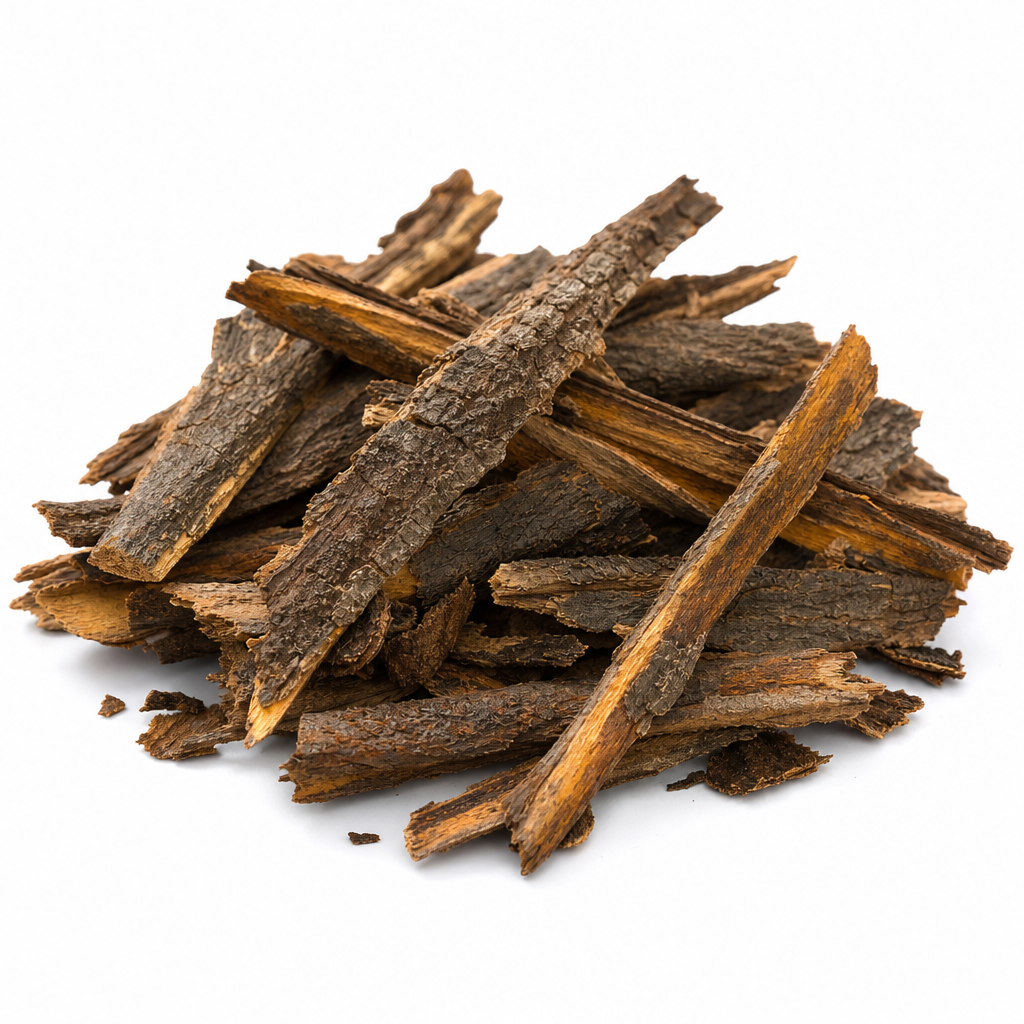
What exactly is Buckthorn Bark and why do people take it as a supplement?
Buckthorn Bark is the dried bark of Rhamnus cathartica (common buckthorn) or the closely related Rhamnus frangula (alder buckthorn), shrubs native to Europe, western Asia, and North Africa. It has been used in traditional European herbal medicine primarily as a laxative, with its activity driven by hydroxyanthracene glycosides — compounds that stimulate the colon to move stool along more efficiently. Today it is most commonly found in digestive regularity and colon cleanse formulas, sometimes alongside complementary ingredients like [Aloe Vera](/ingredients/aloe-vera) or [Cascara Sagrada](/ingredients/cascara-sagrada), which share a similar mechanism of action.
Is there actual clinical evidence that Buckthorn Bark works for constipation, or is it mostly traditional use?
Buckthorn Bark has a reasonably solid evidence base for short-term constipation relief, with an evidence score of approximately 7.8/10 — stronger than many botanical laxatives. Its hydroxyanthracene derivatives are well-characterized pharmacologically and are known to stimulate colon motility by acting on the enteric nervous system and increasing fluid secretion into the bowel. Evidence for secondary benefits like bile flow support and antioxidant activity is more preliminary, scoring in the 5.4–5.9/10 range, and should not be the primary reason someone chooses this ingredient. Regulatory bodies including the European Medicines Agency have recognized its traditional use for short-term relief of occasional constipation.
Who is Buckthorn Bark actually a good fit for, and who should probably look at something else?
Buckthorn Bark may be most appropriate for adults experiencing occasional, short-term constipation who are looking for a botanically-derived option with a relatively well-documented mechanism. It is not considered suitable for long-term daily use, and individuals with inflammatory bowel conditions, intestinal obstruction, abdominal pain of unknown origin, or who are pregnant or breastfeeding are generally advised to avoid stimulant laxatives in this class. People seeking gentler, ongoing gut support may be better served by prebiotic or probiotic approaches — for example, ingredients like [Lactobacillus acidophilus](/ingredients/lactobacillus-acidophilus) or [fructooligosaccharides](/ingredients/fructooligosaccharides) that support the microbiome rather than stimulating motility directly.
How much Buckthorn Bark should I actually take, and does the timing matter?
Standardized extracts are typically dosed to deliver 20–30 mg of hydroxyanthracene derivatives per day, while non-standardized dried bark preparations are commonly used at 0.5–2.5 g per dose. Timing matters meaningfully with this ingredient: because Buckthorn Bark has a 6–12 hour onset window, taking it in the evening is generally recommended so that the laxative effect occurs the following morning. It is available in capsules, tinctures, liquid extracts, teas, and powders — capsules and standardized extracts offer the most consistent dosing. Products like [OPA Colon Sweep – Digestive Regularity, Fiber & Cleansing Support](/products/opa-colon-sweep-daily-detox-support) combine Buckthorn Bark with complementary fiber and cleansing ingredients in a convenient capsule format.
Are there any safety concerns or drug interactions I should know about before taking Buckthorn Bark?
Buckthorn Bark is generally considered safe for short-term use — typically no longer than 1–2 weeks — but prolonged use may lead to electrolyte imbalances, particularly low potassium (hypokalemia), which can be clinically significant for people taking cardiac glycosides, diuretics, or corticosteroids. Chronic use has historically been associated with a condition called melanosis coli (a harmless pigmentation of the colon lining) and, in older literature, concerns about dependency, though modern evidence on the latter is less definitive. It should be avoided in children under 12, during pregnancy and breastfeeding, and in anyone with intestinal obstruction, Crohn's disease, ulcerative colitis, or appendicitis. As with all stimulant laxatives, it is not a substitute for addressing underlying causes of chronic constipation.
How does Buckthorn Bark compare to Aloe Vera for constipation — are they basically the same thing?
Buckthorn Bark and [Aloe Vera](/ingredients/aloe-vera) (specifically aloe latex) share a broadly similar mechanism — both contain anthraquinone-type compounds that stimulate colon motility — but they are distinct botanicals with different phytochemical profiles and regulatory histories. Buckthorn Bark's active compounds are primarily anthraquinone glycosides like emodin and frangulin, while aloe latex relies heavily on aloin (barbaloin); both carry similar cautions around short-term use only and electrolyte monitoring. Buckthorn Bark has a somewhat stronger evidence score for constipation relief (7.8/10) compared to aloe latex, which has faced more regulatory scrutiny in some markets. Unlike food sources of fiber or prebiotics — where you can meaningfully increase intake through diet — neither Buckthorn Bark nor Aloe Vera latex is realistically obtained in therapeutic amounts through food, making supplementation the practical route for either.