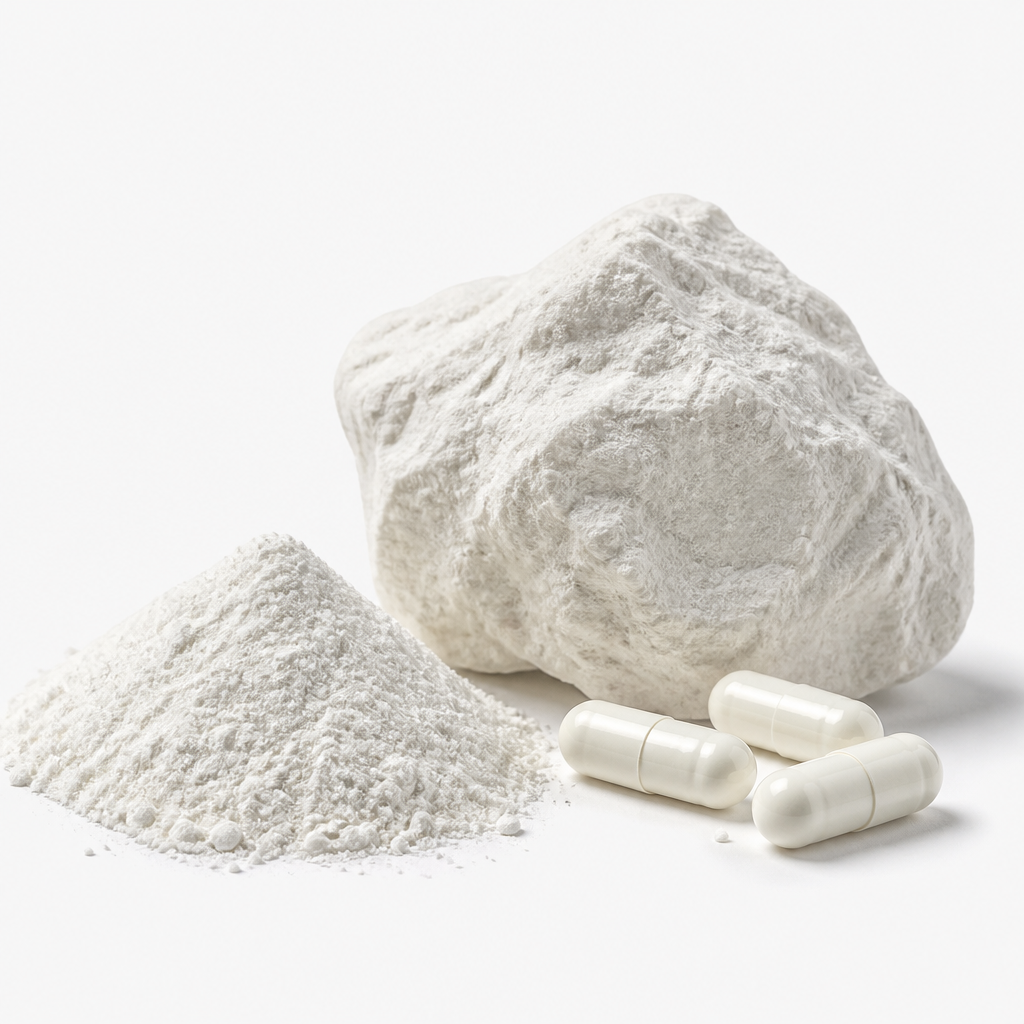
What exactly is calcium carbonate and why do people take it as a supplement?
Calcium carbonate is a mineral compound derived from natural sources like limestone, chalk, and oyster shells, and it contains roughly 40% elemental calcium — one of the highest concentrations among calcium supplement forms. It is most commonly used to help maintain adequate daily calcium intake, support bone density, and neutralize excess stomach acid, making it a dual-purpose ingredient found in both bone health supplements and over-the-counter antacids. Because it is poorly water-soluble, it relies on stomach acid for proper absorption, which is why it is typically taken with food. Related bone-supportive ingredients worth exploring include [alfalfa leaf](/ingredients/alfalfa-leaf) and [oat seed](/ingredients/oat-seed), both of which are studied for their roles in mineral metabolism.
How strong is the clinical evidence behind calcium carbonate — does it actually work?
Calcium carbonate has some of the most well-established evidence of any supplemental mineral, particularly for bone density support, where the evidence is rated at 9.1 out of 10 based on decades of randomized controlled trials and meta-analyses. Its role in neutralizing gastric acid is also strongly supported, with an evidence score of 8.7 out of 10, reflecting consistent clinical data on its use as an antacid. Pregnancy nutritional support is another well-studied application, with research showing calcium carbonate supplementation may help reduce the risk of hypertensive disorders during pregnancy. Evidence for dental strength and muscle and nerve function is moderate to strong, though these benefits are more dependent on correcting an underlying calcium deficiency.
Who actually needs to take a calcium carbonate supplement — is it for everyone?
Calcium carbonate supplementation is most relevant for people who do not consistently meet their daily calcium needs through diet alone, including postmenopausal women, older adults, pregnant or breastfeeding individuals, and those following dairy-free or vegan diets. People with conditions that impair calcium absorption — such as inflammatory bowel disease or those taking certain medications — may also benefit from supplemental calcium. However, individuals who already consume adequate dietary calcium from sources like dairy, fortified plant milks, or leafy greens may not see additional benefit and should avoid unnecessary supplementation. If you are also supporting digestive regularity alongside calcium intake, [OPA Colon Sweep](/products/opa-colon-sweep-daily-detox-support) contains complementary fiber ingredients like [psyllium husk](/ingredients/psyllium-husk) that may support gut transit.
How much calcium carbonate should I take daily, and does it matter when I take it?
The typical effective dose range for calcium carbonate is 500 to 1,200 mg of elemental calcium per day, but because absorption becomes less efficient at higher single doses, it is generally recommended to split intake into doses of 500 mg or less taken at separate times. Timing matters significantly with calcium carbonate: unlike calcium citrate, it requires an acidic stomach environment to dissolve properly, so it should always be taken with meals rather than on an empty stomach. Total daily calcium intake from both food and supplements combined should generally not exceed 2,000–2,500 mg, as higher amounts are not associated with additional benefit and may increase certain risks. Splitting doses across meals is a simple and effective strategy to maximize absorption without exceeding safe thresholds.
Are there any safety concerns or drug interactions I should know about before taking calcium carbonate?
Calcium carbonate is generally considered safe at recommended doses, but excessive intake — typically above 2,500 mg of elemental calcium per day — may contribute to hypercalcemia, kidney stones, or a rare condition called milk-alkali syndrome. It can interfere with the absorption of several medications, including thyroid hormones, certain antibiotics (like tetracyclines and fluoroquinolones), bisphosphonates, and iron supplements, so these should be taken at least two hours apart from calcium carbonate. People with a history of kidney stones, hypercalcemia, or reduced kidney function should consult a healthcare provider before supplementing. Because calcium carbonate acts as an antacid and raises stomach pH, it may also reduce the effectiveness of medications that require an acidic environment for absorption, such as some antifungals.
How does calcium carbonate compare to getting calcium from food, and how does it relate to ingredients like aloe vera?
Food sources of calcium — such as dairy products, fortified plant milks, tofu, and leafy greens — are generally preferred because they come packaged with co-nutrients like vitamin K2, magnesium, and phosphorus that support calcium metabolism and bone incorporation, whereas calcium carbonate supplements provide the mineral in isolation. That said, supplementation is a practical and well-studied option when dietary intake is consistently insufficient, and calcium carbonate's high elemental calcium content (around 40%) makes it one of the more cost-effective supplement forms available. [Aloe vera](/ingredients/aloe-vera) is a very different type of ingredient — it is primarily studied for its role in soothing the digestive tract and supporting gut lining integrity rather than providing meaningful mineral content, so the two are not direct substitutes. If digestive comfort is a concern alongside calcium intake, pairing calcium carbonate with gut-supportive ingredients like [lactobacillus acidophilus](/ingredients/lactobacillus-acidophilus) may help some individuals manage the constipation that calcium carbonate can occasionally cause.