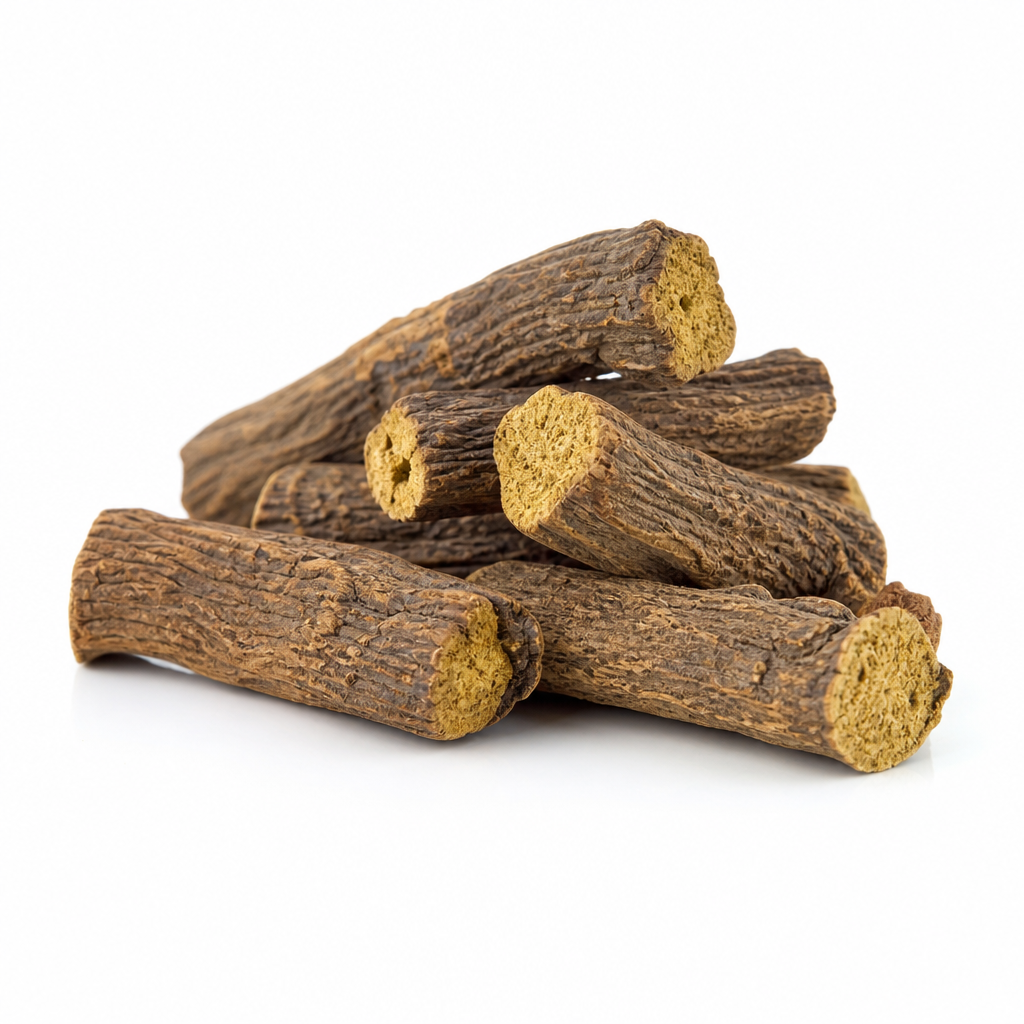
What exactly is rhubarb root and why do people take it as a supplement?
Rhubarb root refers to the dried root of Rheum palmatum or Rheum officinale — medicinal species distinct from the garden rhubarb used in cooking — and has been a cornerstone of Traditional Chinese Medicine (known as Da Huang) for over 2,000 years. Its primary bioactive compounds are anthraquinones (including emodin and rhein) along with tannins and stilbenes, which together give it a dual reputation: stimulating bowel motility at higher doses and providing astringent, anti-inflammatory effects at lower doses. People most commonly take it today to support digestive regularity, occasional constipation relief, and general gut health, and it is sometimes combined with complementary botanicals like [Aloe Vera](/ingredients/aloe-vera) in formulas such as [OPA Colon Sweep](/products/opa-colon-sweep-daily-detox-support).
Is there actual clinical research backing rhubarb root, or is it mostly traditional use?
Rhubarb root has a reasonably strong evidence base for digestive and bowel regularity applications, with an evidence score of approximately 8.1/10 supported by multiple randomized controlled trials and systematic reviews demonstrating its anthraquinone constituents stimulate peristalsis and reduce intestinal transit time. Research on its anti-inflammatory activity (evidence score ~6.7/10) and antioxidant properties (~6.5/10) is promising but largely based on in vitro and animal studies, with fewer large-scale human trials. Hepatoprotective effects and gut microbiome modulation have been studied — particularly in Chinese clinical settings — but the evidence remains preliminary, and more rigorous trials are needed before strong conclusions can be drawn for those applications.
Who is rhubarb root actually a good fit for — is it just for people with constipation?
Rhubarb root is most clearly suited to adults experiencing occasional constipation or sluggish bowel motility, as its anthraquinone content has the most robust human evidence for that application. Beyond that, it may be worth considering for individuals interested in supporting liver health or managing mild digestive inflammation, though the evidence for those uses is less definitive. It is not an appropriate daily long-term supplement for everyone — people with chronic digestive conditions, those who are pregnant, or individuals on medications affecting the gut or liver should consult a healthcare provider before use, and those seeking broader gut microbiome support may also want to explore complementary ingredients like [Lactobacillus acidophilus](/ingredients/lactobacillus-acidophilus) or [Fructooligosaccharides](/ingredients/fructooligosaccharides).
How much rhubarb root should I take and does the timing matter?
For laxative or bowel regularity effects, typical doses target 20–30 mg of standardized anthraquinones, which generally corresponds to roughly 1–4 g of dried root depending on the extract's concentration. Timing does matter: taking rhubarb root in the evening is conventional for laxative use, as the onset of effect typically occurs 6–10 hours after ingestion, while lower doses taken with meals are more appropriate when the goal is general digestive support rather than acute bowel stimulation. Always follow the specific dosing guidance on your supplement's label, since standardized extracts and raw dried root powders can vary significantly in anthraquinone content — products like [OPA Colon Sweep](/products/opa-colon-sweep-daily-detox-support) combine rhubarb with other botanicals at formulated doses designed for daily digestive support.
Are there any safety concerns or drug interactions I should know about before taking rhubarb root?
Rhubarb root is generally considered safe for short-term use at recommended doses, but prolonged or high-dose use carries real risks: chronic intake of anthraquinone laxatives can lead to electrolyte imbalances (particularly low potassium), dependency, and a condition called melanosis coli (darkening of the colon lining). It should be avoided during pregnancy, breastfeeding, and in individuals with intestinal obstruction, inflammatory bowel disease, or kidney disease, as oxalate content may exacerbate kidney stone risk. Drug interactions are clinically relevant — rhubarb root may potentiate the effects of diuretics, cardiac glycosides (like digoxin), and anticoagulants, and may alter the absorption of oral medications taken simultaneously, so consulting a pharmacist or physician before combining it with prescription drugs is strongly advised. Similar caution applies to other anthraquinone-containing botanicals like [Cascara Sagrada](/ingredients/cascara-sagrada) and [Buckthorn Bark](/ingredients/buckthorn-bark).
How does rhubarb root compare to aloe vera for digestive support — are they interchangeable?
Rhubarb root and [Aloe Vera](/ingredients/aloe-vera) both contain anthraquinone compounds that can support bowel regularity, but they are not fully interchangeable: rhubarb root's anthraquinone concentration is generally higher and its laxative action more potent, while aloe vera latex provides a milder stimulant effect and aloe vera gel is more associated with soothing the intestinal lining and supporting gut comfort. Unlike rhubarb root, aloe vera also has a broader topical and internal use profile for skin and mucosal health. In practice, the two are often combined in digestive formulas — as in [OPA Colon Sweep](/products/opa-colon-sweep-daily-detox-support) — to balance efficacy with tolerability, and neither is a substitute for dietary fiber sources or probiotic support from ingredients like [Bifidobacterium lactis](/ingredients/bifidobacterium-lactis) when addressing long-term gut health.