MINERAL · USE WITH CAUTION

Bentonite

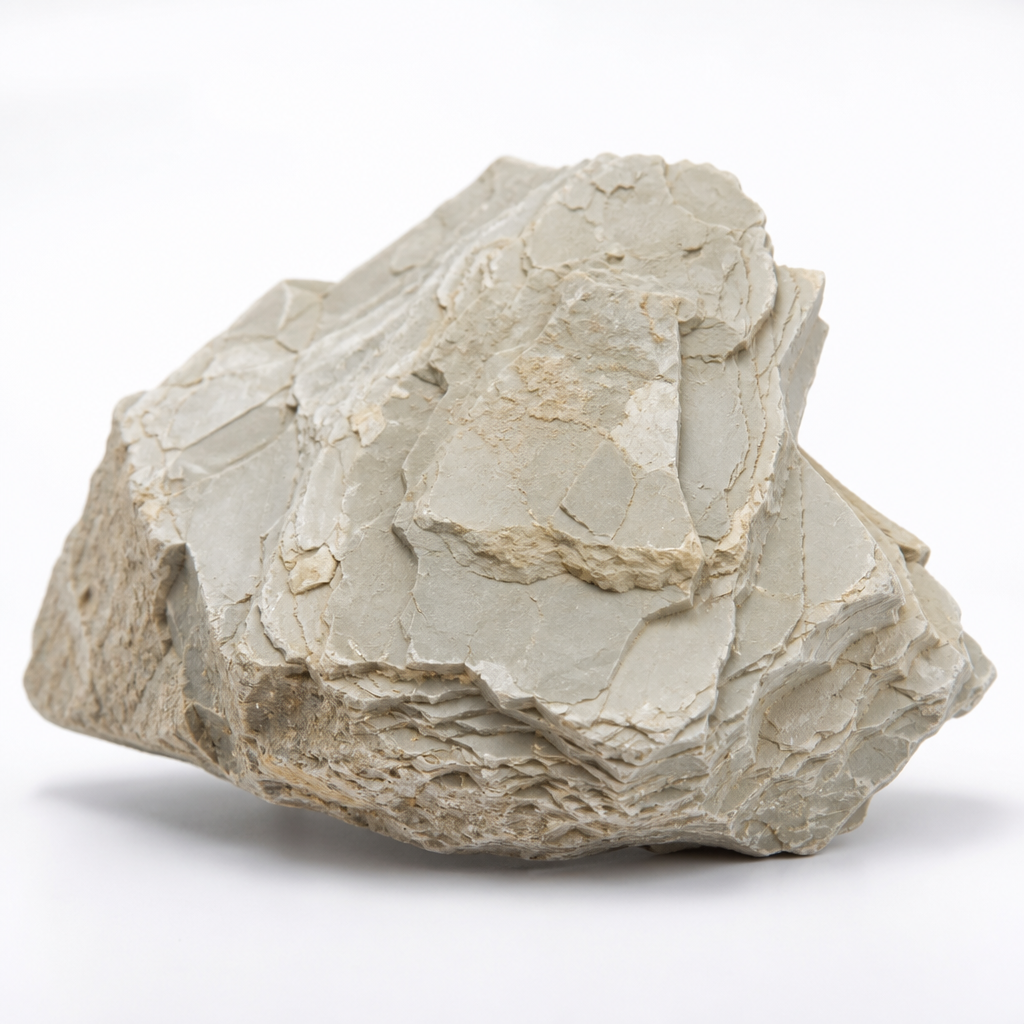
Bentonite is a naturally occurring phyllosilicate clay mineral composed primarily of montmorillonite, formed from the weathering of volcanic ash deposits over millions of years. It is mined from sedimentary deposits found across the United States, India, China, and parts of Europe, with its name derived from Fort Benton, Wyoming, where large deposits were first identified. The mineral is characterized by its remarkable layered crystalline structure, which gives it an exceptionally high surface area and strong negative ionic charge — properties central to its biological applications. When ingested or applied topically, bentonite acts primarily as an adsorbent, attracting positively charged molecules such as heavy metals, mycotoxins, and certain pathogens to its surface, facilitating their removal from the gastrointestinal tract before systemic absorption occurs. This mechanism is supported by in vitro and animal studies, though robust large-scale human clinical trials remain limited. In wellness contexts, bentonite clay is used internally as a detoxification aid and digestive support agent, and externally in skincare formulations for its ability to absorb excess oils, impurities, and irritants. It has a long history of traditional use across many cultures as a medicinal earth, and modern research continues to investigate its potential roles in gut health, heavy metal chelation, and aflatoxin binding, particularly in populations with high dietary mycotoxin exposure.
5.4
Evidence / 10
Moderate
Top benefit
1+
Verified products
Bentonite

What it's proven to support

Evidence confidence for each benefit area, from verified research.

Related ingredients

Frequently formulated and compared with Bentonite.

HOW MUCH
500 mg – 3,000 mg per day (internal use); variable for topical applications
WHEN
Between meals or at least 1–2 hours away from medications and other supplements
SAFETY
Use With Caution

Shop verified products

View all 1

Buyer questions

What exactly is bentonite clay and why do people take it as a supplement?
Bentonite is a naturally occurring clay mineral formed from the weathering of volcanic ash, composed primarily of montmorillonite. It carries a strong negative electrical charge that allows it to attract and bind positively charged molecules — including certain toxins, heavy metals, and pathogens — in the digestive tract. People commonly use it internally to support digestive comfort and as a general cleansing aid, and topically as a skin-purifying mask. It is available in several forms including powder, capsules, liquid suspension, and topical gels.
Is there actual research backing up bentonite clay's health benefits, or is it mostly anecdotal?
The clinical evidence for bentonite varies meaningfully by application. Its strongest research support is in topical skin purification (evidence score ~7.5/10) and mycotoxin or aflatoxin binding in the gut (evidence score ~7.2/10), where studies suggest it may help adsorb harmful mold-derived compounds in the GI tract. Heavy metal adsorption has a moderate evidence base (~6.8/10), while benefits for digestive comfort, pathogen binding, and gut microbiome protection are supported by preliminary or animal-model research and carry lower confidence scores (~5.5–6.2/10). Overall, bentonite is better studied for its binding and topical properties than for systemic wellness effects.
Who is most likely to actually benefit from taking a bentonite supplement?
People who may benefit most from bentonite supplementation include those seeking support for occasional digestive discomfort, individuals concerned about dietary exposure to mycotoxins or aflatoxins (common in grains and nuts), and those using it topically for oily or congested skin. It is also commonly included in digestive cleansing formulas alongside fiber-based ingredients — for example, [OPA Colon Sweep](/products/opa-colon-sweep-daily-detox-support) combines bentonite with psyllium and aloe vera for digestive regularity support. People with healthy, uncompromised digestion and no specific concerns may see less noticeable benefit from internal use.
How much bentonite should I take daily, and does it matter when I take it?
Typical internal doses of bentonite range from 500 mg to 3,000 mg per day, depending on the product form and intended use. Timing matters significantly: bentonite should be taken between meals and at least 1–2 hours away from medications, other supplements, and nutrients, because its strong adsorptive properties can bind to and reduce the absorption of drugs and micronutrients if taken simultaneously. Drinking adequate water alongside bentonite powder or capsules is also important, as the clay swells when hydrated. For topical clay masks, dosing is variable and product-specific.
Are there any safety concerns or drug interactions I should know about before using bentonite clay?
Bentonite's primary safety concern is its non-selective binding capacity — because it adsorbs both harmful and beneficial molecules, it can interfere with the absorption of prescription medications, oral contraceptives, fat-soluble vitamins, and other supplements if taken too close together. Long-term or high-dose internal use has raised questions about potential lead content in some commercial clay products, as naturally occurring bentonite can contain trace heavy metals depending on its source and processing. Pregnant or breastfeeding individuals, people with kidney disease, and those on critical medications should consult a healthcare provider before using bentonite internally. It is generally considered safe for short-term topical use.
How does bentonite clay compare to alfalfa leaf as a supplement, and can you get similar benefits from food?
Bentonite and [alfalfa leaf](/ingredients/alfalfa-leaf) serve quite different purposes: bentonite is an inorganic mineral clay that works primarily through physical adsorption of toxins and pathogens in the gut, while alfalfa is a plant-based ingredient valued for its chlorophyll, vitamins, and alkalizing properties. Unlike most health supplements, bentonite has no meaningful dietary food source — it is a mined mineral clay and cannot be obtained through eating. Alfalfa, by contrast, can be consumed as sprouts or greens, making it more accessible through diet alone. If your primary interest is digestive cleansing support, bentonite's binding mechanism is distinct from anything achievable through food, whereas alfalfa's nutritional benefits can be partially replicated through a varied plant-rich diet.

Research

Ready to compare Bentonite products?

1 verified products, scored ingredients, real research.