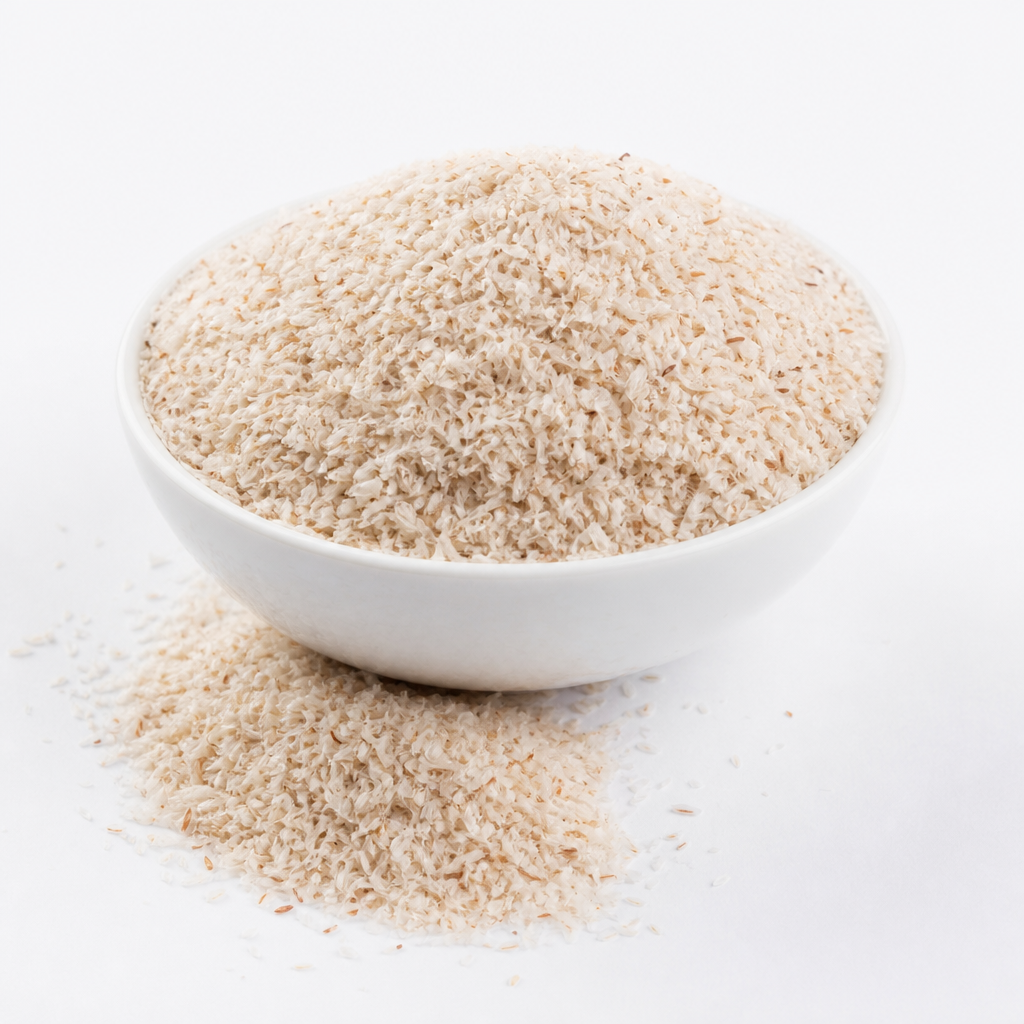
What exactly is psyllium husk and why do people take it as a supplement?
Psyllium husk is a soluble dietary fiber derived from the seed coat of Plantago ovata, a plant cultivated primarily in India and Pakistan. When it contacts water in the gastrointestinal tract, it absorbs liquid and forms a thick, viscous gel — a property that underlies most of its studied benefits. It is most commonly used to support bowel regularity, manage occasional constipation, and help maintain healthy cholesterol and blood sugar levels. Some formulas combine it with complementary ingredients like [Aloe Vera](/ingredients/aloe-vera) for broader digestive support, as seen in products like [OPA Colon Sweep](/products/opa-colon-sweep-daily-detox-support).
How strong is the actual clinical evidence behind psyllium husk — is it well-studied or mostly hype?
Psyllium husk is one of the better-researched dietary fiber supplements available, with particularly strong evidence for bowel regularity and constipation relief (evidence score 9.3/10) and LDL cholesterol reduction (9.1/10), the latter supported enough that the FDA permits a qualified health claim for psyllium and heart disease risk. Evidence for postprandial blood glucose control is also robust (8/10), while support for IBS symptom management (7.6/10) and satiety (6.8/10) is meaningful but more variable across individuals. Its effects on the gut microbiome are an emerging area of interest, with research suggesting it may act as a prebiotic substrate for beneficial bacteria like those found in [Bifidobacterium lactis](/ingredients/bifidobacterium-lactis) and [Lactobacillus plantarum](/ingredients/lactobacillus-plantarum) formulas.
Who actually gets the most benefit from taking psyllium husk — is it just for people with constipation?
While people dealing with occasional constipation or irregular bowel movements are among the most common users, psyllium husk may also be particularly useful for individuals managing elevated LDL cholesterol, those with type 2 diabetes or prediabetes looking to blunt post-meal blood sugar spikes, and people with IBS who experience both constipation and diarrhea (since the gel can work bidirectionally to normalize stool consistency). Adults eating a low-fiber Western diet may also benefit from psyllium as a practical way to close the fiber gap without dramatically overhauling food intake. Those interested in gut microbiome support may find psyllium complements probiotic ingredients like [Lactobacillus acidophilus](/ingredients/lactobacillus-acidophilus) or [Fructooligosaccharides](/ingredients/fructooligosaccharides).
How much psyllium husk should I take daily, and does it matter when I take it?
The typical effective dose range studied in clinical research is 5–15 grams per day, often divided into one to three doses taken before meals. Timing matters: psyllium is generally recommended to be taken before eating, with a full 8-ounce glass of water, so the gel can form and slow gastric emptying — which is key to its effects on satiety and blood glucose control. Starting at a lower dose (around 5 g/day) and gradually increasing over one to two weeks is commonly advised to allow the gut to adjust and minimize bloating or gas. Capsule forms like those in [OPA Colon Sweep](/products/opa-colon-sweep-daily-detox-support) can make dosing more convenient, though powder forms allow easier dose titration.
Are there any safety concerns or drug interactions I should know about before taking psyllium husk?
Psyllium husk is generally recognized as safe for most adults, but it must always be taken with adequate water — consuming it without sufficient fluid can cause it to swell in the esophagus or throat, posing a choking or obstruction risk. Because psyllium slows gastrointestinal transit and can affect absorption, it may reduce the absorption of certain medications (including some antidiabetic drugs, lithium, and carbamazepine) if taken simultaneously; spacing psyllium at least one to two hours away from medications is typically recommended. People with difficulty swallowing, esophageal narrowing, or a history of bowel obstruction should consult a healthcare provider before use, and rare allergic reactions (including occupational asthma from powder inhalation) have been reported. Those taking laxative-category ingredients like [Cascara Sagrada](/ingredients/cascara-sagrada) or [Buckthorn Bark](/ingredients/buckthorn-bark) alongside psyllium should be mindful of additive effects on bowel motility.
How does psyllium husk compare to aloe vera for digestive support — are they doing the same thing?
Psyllium husk and [Aloe Vera](/ingredients/aloe-vera) both support digestive health but through meaningfully different mechanisms. Psyllium works primarily by forming a bulk-forming, gel-like mass that normalizes stool consistency, slows glucose absorption, and feeds beneficial gut bacteria — making it especially well-suited for cholesterol management and blood sugar control in addition to regularity. Aloe vera, by contrast, is more commonly used for its soothing, anti-inflammatory properties in the gut lining and, in its latex form, has stimulant laxative effects that are quite different from psyllium's bulk-forming action. The two are sometimes combined in formulas like [OPA Colon Sweep](/products/opa-colon-sweep-daily-detox-support) precisely because they address complementary aspects of digestive function rather than duplicating each other.